
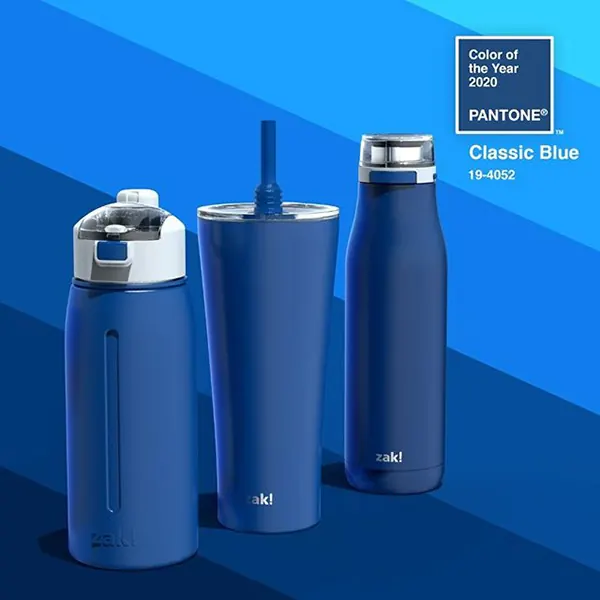



Zak! Designs
EAn in-house commercial photography role that ran for five years and taught me as much about creative structure as it did about the craft.
Five years of commercial photography inside a company that outgrew me
- Categories
- Graphics & Advertising, Film & Video, Photography
- Role
- Commercial Photographer, Graphic Designer
- Software
- Adobe Photoshop, Adobe Illustrator, Adobe Lightroom, Adobe After Effects, Adobe Premiere Pro, Blender, Maxon Cinema 4D, Keyshot
- Language
- Framework
- Script
- Hardware
- Canon EOS 5D Mark III
- Service
/Live References
The story
/4 Videos
By the time Zak! Designs let me go, I had spent five years as their in-house commercial photographer, a run that covered product photography, graphic design work, video, and motion. The position ended when management changed and brought in a third-party agency to do what I had been doing. That ending is where the real story starts, because the five years before it were full of the kind of friction that sharpens a creative practitioner whether they ask for it or not.
The Situation
Zak! Designs is a product company with enough of a sales base to sustain a dedicated in-house creative operation. I joined their studio team in 2019 with a hyphenated title: commercial photographer and graphic designer. In practice, the photography was the job. I was the person on the floor with a Canon EOS 5D Mark III, responsible for producing the product photos the company needed to sell. The role was full-time and salaried, and it was the first proper in-house creative position I had held.
What Was in the Way
The structural tension started early and never fully resolved. The company already had a way of doing things, and that way had gotten them to where they were. That is not a criticism. It is simply the reality of joining a company that has built momentum before you arrive: the processes belong to people who were there first, and they have good reasons, or at least long-established reasons, for defending them.
The problem showed up in two places. First, deadlines. Some jobs were scoped realistically and I finished them on time or ahead of schedule. Others arrived with timelines that did not account for what the work actually required, and about a quarter to a third of my assignments ran past the deadline as a result. That is a real number, not a comfortable one, and the cause was almost always the same: the volume of work assigned did not fit the time given, and there was no reliable process for flagging that mismatch before it became a slip.
Second, quality versus speed. Every time I surfaced a concern about how something was being shot, structured, or sequenced, the response was to move faster rather than to pause and address the issue. I would present an approach, offer a rationale, and then watch the conversation end without resolution. It was not that my input was rejected outright. It was that the company’s existing structure was treated as sufficient, and anything that asked the structure to change was quietly set aside. The cost of that pattern was not dramatic. No single job fell apart. But over five years it accumulated into a gap between what the work could have been and what it was, and I felt that gap every time I handed something over that I knew had been rushed.
What I Did
My daily work was commercial product photography, lit and shot in-studio on the Canon 5D Mark III and processed through Lightroom and Photoshop. On top of that I took on graphic design tasks in Illustrator, and at various points contributed video editing in Premiere Pro, motion work in After Effects, and 3D rendering in Cinema 4D, Blender, and Keyshot. The range was wide because the company’s needs were wide, and being the person who could cover multiple disciplines meant I was useful across more of the operation than a single-discipline hire would have been.
What I consistently pushed for was a quality-first workflow: photograph something correctly once rather than reshoot it twice under pressure. I argued for clearer scoping before jobs were assigned, so that a realistic timeline could be set rather than a hopeful one. Some of that stuck. Most of it did not. When management changed partway through my tenure, the appetite for that kind of structural conversation dropped further. The new direction favored output speed, and my role quietly narrowed.
I did not stop raising the issues. I kept shooting, kept designing, and kept presenting alternatives when I saw a better path. But I also learned to read which battles were worth the conversation and which ones would only cost me goodwill I needed for the next job. That is a skill the role taught me that I had not fully had when I arrived.
What Happened
After five years, Zak! Designs went through another management change and contracted a third-party agency to handle the creative work I had been doing. I was relieved of my duties. There was no dramatic incident. The company had grown, priorities had shifted, and an outside agency was the answer they landed on.
It is worth saying plainly: the photography work I produced was used. The company ran on it for five years. Jobs got out the door. But the metric I most wanted to move, the ratio of work produced at the quality level I thought it deserved, never got to where I wanted it. Sixty-five to seventy-five percent of my assignments were delivered on or before deadline, which left a consistent minority that ran long, nearly all of them for the same preventable reason.
What I Took From It
This was the most lucrative creative position I have held, and the only full-time in-house role I have worked. Those two facts matter. It gave me a ground-level view of how a product company’s creative operation actually runs, not how it is described in a brief, but how it runs day to day when schedules slip and priorities compete.
What I would carry forward is the conviction that quality and speed are not opposites, but the case for quality has to be made in operational terms, not aesthetic ones. Saying a photo looks better is not enough. Saying it will not need to be reshot saves a day is a different conversation. I learned that distinction the hard way, and I would make the argument that way from the start next time.

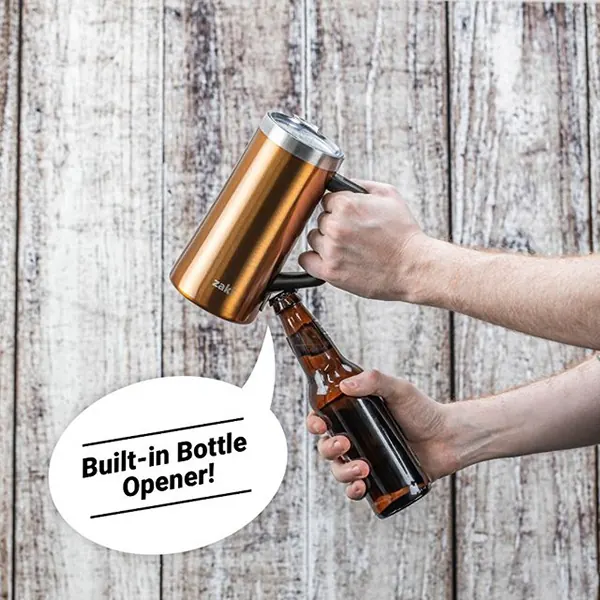


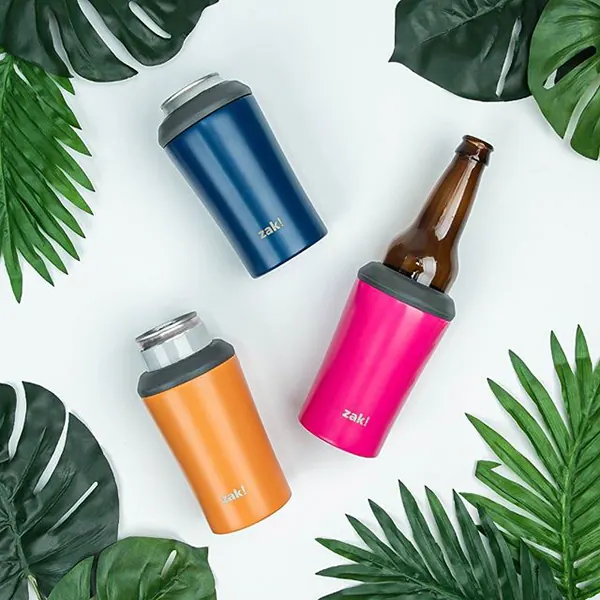

Quality and speed are not opposites, but the case for quality has to be made in operational terms, not aesthetic ones.
/More images 9 from this project


In their words
"
/Behind the scenes
This was the one full-time creative job I have held. I am not certain a different approach on my part would have changed the outcome, but it remains the most lucrative position I have worked, and it shaped how I think about what it means to operate as a creative professional inside someone else's structure.
/Index
- 2019–2024
- Spokane, WA
- Graphics & Advertising, Film & Video, Photography
- Commercial Photographer, Graphic Designer
- Adobe Photoshop, Adobe Illustrator, Adobe Lightroom, Adobe After Effects, Adobe Premiere Pro, Blender, Maxon Cinema 4D, Keyshot
- Canon EOS 5D Mark III
- Commercial Photography, Product Photography, In-House Creative, Graphic Design, Motion Design, Studio Work